Three Signals, One Conclusion: US Airline Fares Aren’t Coming Down
Three developments this week all point to the same managed-travel conclusion. United CEO Scott Kirby confirmed the airline will recoup 100% of its fuel-cost exposure from the January–May spike—$24.1 billion industry-wide, with the sector having recovered roughly 60% so far—meaning fare increases and bag fees are structural, not transient, even as Middle East tensions ease. American Airlines CEO Robert Isom is widely expected not to finish 2026 in his seat; former US Airways chief Doug Parker surfaced as the leading replacement candidate at multiple IATA AGM conversations in Rio, signaling continued strategic paralysis on premium product and corporate-account investment at a carrier already trailing Delta and United. Meanwhile, the proposed pilot retirement-age extension to 67 does not improve international capacity: ICAO standards cap pilot-in-command authority at 65 on international flights, meaning pilots aged 65–67 fly domestic only. For Q3/Q4 negotiations, do not model a fare dip.
Delta Crew Averts Boston Runway Collision After ATC Clears Two Jets for Intersecting Runways
On June 20, a Boston Logan tower controller lost track of an active takeoff clearance already issued to American Airlines 3161 (737-800, Charlotte-bound) and cleared Delta 2351 (A319, arriving from Dallas) to land on an intersecting runway—while simultaneously clearing Southwest to follow and describing the AA aircraft as “holding.” Delta’s crew, approximately 450 feet from touchdown, called a go-around and averted a collision. No pilot deviation occurred; both crews followed valid clearances issued by the same controller. The failure is systemic—a procedural breakdown at a chronically overtaxed Northeast hub, not a one-off staffing anomaly—and Logan’s intersecting runway configuration amplifies controller workload beyond most comparable US airports. An FAA incident report is required. Advisors with duty-of-care programs routing clients through BOS should document this ATC failure pattern when briefing corporate risk management.
URGENT: IHG Premier Card All-Time High Bonus (185,000 Points) Expires June 25 at 9 AM Eastern
IHG’s One Rewards Premier card is carrying its highest-ever welcome offer: 150,000 points after $3,000 spend in the first 90 days plus 35,000 after $6,000 in six months—185,000 points total, valued at roughly $1,018 by third-party estimates. The offer expires June 25 at 9 AM Eastern, approximately 72 hours from today. The Premier card’s standing benefits include the 4th-night-free redemption feature, an annual free night certificate, and automatic IHG Platinum status—most valuable for clients regularly staying at Crowne Plaza, Kimpton, InterContinental, Regent, and Six Senses properties. No comparable offer is forecast after June 25. Advisors with IHG-loyal clients who have not yet held this card should issue personal outreach today; the 4th-night-free feature also stacks meaningfully for clients on extended project stays where a company card covers the base rate.
Chase Sapphire Preferred Refreshed—But Hyatt Transfer Drops to 4:3; Existing Holders Have Until September 30
Chase overhauled the Sapphire Preferred effective June 15: new 3x earning on gas, EV charging, and vacation rentals (Airbnb, VRBO, Vacasa); welcome bonus raised to 100,000 points after $5,000 spend; a $100 Chase Travel hotel credit; and up to $120 Global Entry/TSA PreCheck reimbursement. The critical devaluation: anyone who applied on or after June 15 now transfers Ultimate Rewards to World of Hyatt at 4:3, not 1:1. Existing Sapphire Preferred and Ink Business Preferred holders retain the 1:1 rate until September 30, at which point the 4:3 ratio takes permanent effect. Chase Sapphire Reserve remains at 1:1 to Hyatt as a deliberate product differentiator. For advisors: reach out to Hyatt-loyal Preferred clients now and flag the September 30 cliff; for future applicants with significant Hyatt spend, the Reserve’s $795 annual fee is now arithmetically justified.
W South Beach Permanently Exits Bonvoy on August 17—Rebooking Required Now
The 350-room W South Beach at 2201 Collins Avenue will take its last Marriott Bonvoy reservation and close on August 17, 2026. Owner Reuben Brothers—who paid approximately $400 million for the property in October 2024—holds no other Marriott-affiliated assets and concentrates on ultra-luxury independent brands including Waldorf Astoria, Auberge, Oetker, and Corinthia. When the hotel reopens after an extensive renovation, likely one to two years from close, it will carry a new flag entirely outside the Bonvoy ecosystem. Termination notices have been issued to approximately 340 staff, confirming this is a long dark period rather than a quick reflag. For advisors: Miami Beach Bonvoy inventory drops materially from mid-August; all open group, MICE, or transient bookings at this property require immediate rebooking into alternative Bonvoy or independent inventory before the August 17 cutoff.
World Cup Week 1: Rate Spikes Are Real, But Occupancy Is Falling in Most Host Cities
First-week CoStar/Cendyn data from World Cup host cities complicates the sold-out narrative advisors have been using to justify rate acceptance. RevPAR is up sharply across most markets, but gains are almost entirely rate-driven: hotels raised ADR 24–100% above baseline, and demand did not follow. Only San Francisco, New York, and Los Angeles registered occupancy increases; the remaining tracked host markets saw declines—from −4% in Boston to −35% in Guadalajara. Properties in Dallas, Kansas City, Seattle, Philadelphia, Miami, and Boston are carrying elevated asking rates against below-average occupancy, which creates real negotiation room, particularly for multi-night stays and post-match dates. Advisors managing corporate groups or incentive programs in any non-coastal World Cup city should revisit rate assumptions; the data supports a harder push on available inventory than headline RevPAR numbers suggest.
Qatar Airways Building Two Lounges in Frankfurt T3; Alaska Retires Mileage Plan, Launches Atmos Rewards
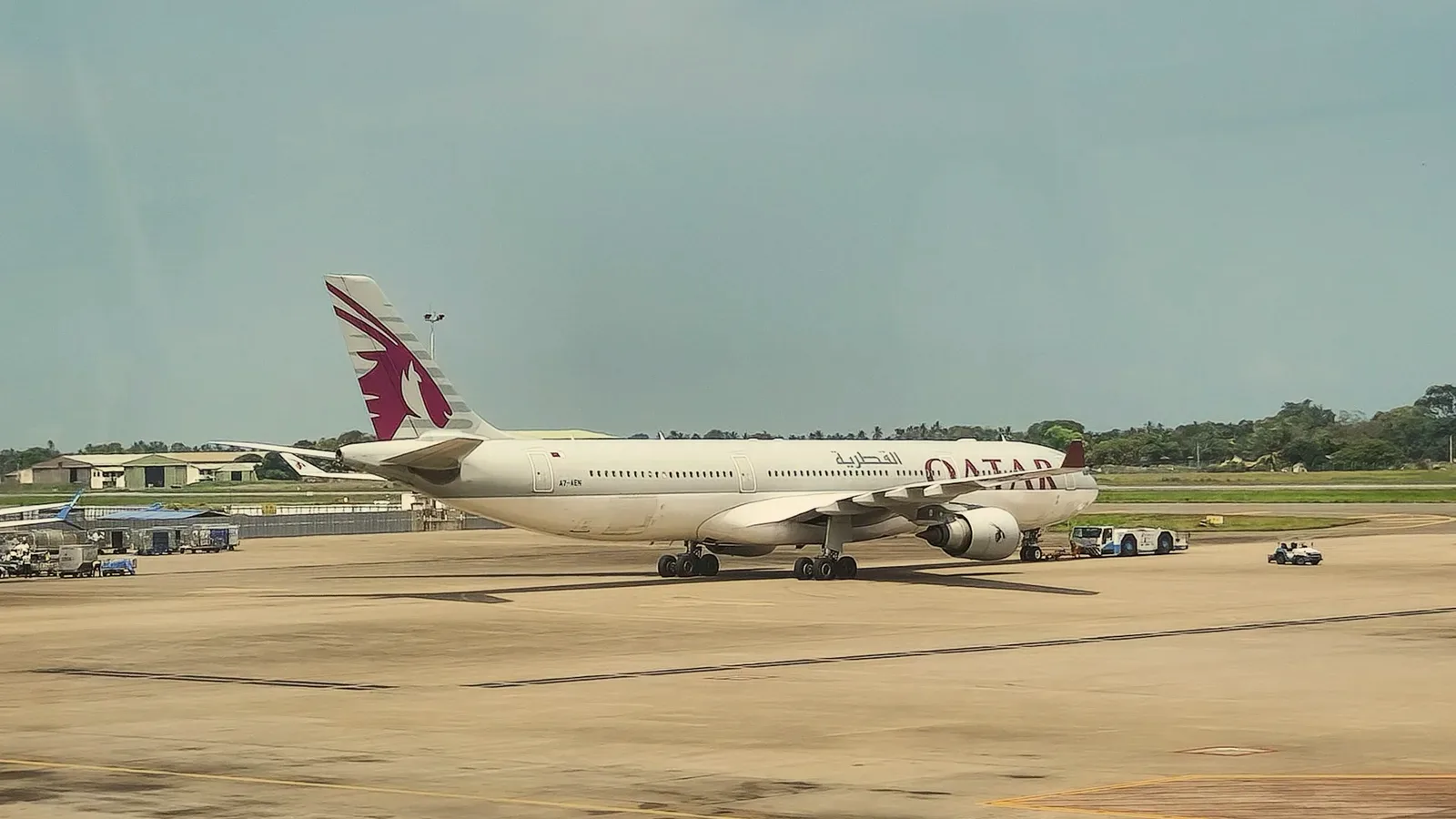
Two alliance developments on the radar. Signage inside Frankfurt Terminal 3’s non-Schengen zone confirms Qatar Airways is constructing two lounge spaces in Europe’s first significant new hub terminal in more than 30 years—likely one premium Qatar lounge and one dedicated oneworld Emerald/Sapphire facility. oneworld carriers in FRA Terminal 3 include American, British Airways, Cathay Pacific, Japan Airlines, Qatar, Oman Air, Royal Air Maroc, Royal Jordanian, and SriLankan; no opening date has been announced, so alternative lounge access must be arranged for T3 itineraries now. Meanwhile, Alaska has retired the Mileage Plan name post-Hawaiian acquisition and relaunched as Atmos Rewards; the new Summit Visa Infinite earns 3x on all foreign spend, and Alaska now flies nonstop to Seoul, Tokyo, Rome, and London. Update travel policies and expense systems from Mileage Plan to Atmos Rewards immediately.
Supply Pipeline: Turkish Adds Premium Economy in 2028, Delta Retires First 717s, Hilton Readies New Brands
Three mid-term supply signals for advisors structuring forward programs. Turkish Airlines confirmed a premium economy reintroduction on widebody jets from 2028, ending a product gap that currently forces managed travel policies into binary choices on Star Alliance stages through Istanbul’s 100-plus-destination hub. Delta has confirmed the first six Boeing 717 retirements (N943AT–N948AT), skipping heavy-maintenance checks on airframes averaging 24.5 years old; capacity will compress on specific short-haul Southeast city pairs, and no replacement narrowbody order has been announced. Finally, returning Hilton Chief Development Officer Christian Charnaux told Skift that five to six organic, purpose-built brand launches are coming “in short order,” distinct from the acquisition-led additions of recent years. New proprietary brands create new Hilton Honors inventory and commission structures; advisors writing multi-year Hilton master agreements in late 2026 should build in placeholder categories.