Hyatt Blows Up Its Award Chart — And SVP Warns 2027 Hits Mid-Tier Too
Effective May 20, Hyatt replaced its 24-category award chart with 78 dynamic pricing tiers. The repricing at aspirational properties is steep: Andaz Tokyo costs more points on 82% of nights, Grand Hyatt Tokyo on 85%, and Park Hyatt Paris Vendôme now starts at 45,000 points — previously the ceiling. Hyatt's SVP has publicly stated this round targets luxury inventory; a second, broader wave sweeping mid-tier properties is locked in for 2027. Meanwhile, Emirates Skywards has simultaneously raised award pricing, meaning clients face a loyalty squeeze across both a leading hotel program and the Gulf's dominant airline FFP in the same week. Five dynamic tiers (lowest through top) are now set within Hyatt for at least the next 12 months, giving a stable pricing floor — but one materially higher than before. Counsel point-heavy clients to redeem high-end Hyatt stays now, and review Emirates award routing costs before issuing any mileage ticket.
Flatbed Supply Surge: United Coastliners and Virgin A330-900neos Both Delivering This Year
United's first two A321neo Coastliners have cleared Hamburg's paint shop, confirming delivery is on schedule. Each aircraft seats 20 Polaris lie-flat passengers (32 on the XLR variant) with full aisle access — the first domestic narrowbodies to offer both a flat bed and Polaris United Lounge access on California–New York routes. Premium seat counts on the corridor rise roughly 50% versus current narrow-body configurations when deployed. On the Atlantic, Virgin Atlantic's remaining ten A330-900neos deliver starting this fall with a substantially reconfigured layout: Upper Class grows from 32 to 48 seats, premium economy from 46 to 56, and Retreat Suite inventory from 2 to 6, including solo window positions for the first time. The product hardware — Vantage XL suites with doors — is unchanged; this is a capacity addition, not a refresh. Both developments mean more premium inventory to book and softer load-factor pressure on fares on two of the highest-volume corporate corridors.
Saudia's Flatbed XLR Enters Service Early June: 24 VantageSOLO Seats, Six Routes
Saudia has accepted delivery of HZ-ASBA, its first A321XLR, equipped with 24 Thompson VantageSOLO fully flat seats with direct aisle access in a 144-seat cabin — the most premium narrow-body business-class configuration currently flying. Revenue service begins early June on routes via Riyadh: Barcelona, Brussels, Milan, Rome, Dakar, and Maldives. With 15 XLRs on order, Saudia is building durable capacity on Middle East–Europe thin routes where lie-flat has historically required wide-body equipment. Advisors routing clients between Europe and Saudi Arabia should update their comparison sets immediately — the XLR product is now commercially competitive with wide-body business on these corridors and introduces a flat-bed alternative where one previously did not exist. Fares and availability are visible via AeroRoutes.
United Opens the First US Nonstop to Santiago de Compostela on May 27 — No Flat Bed, Full Opportunity
United's UA222 departs Newark for Santiago de Compostela on May 27, the first direct flight ever operated between the United States and the Galician pilgrimage city. The outbound runs seven hours; the return (UA221) runs seven hours fifty minutes. Service is seasonal on the Boeing 737 MAX 8, giving United its 46th transatlantic city pair and its longest narrowbody transatlantic pairing. The leisure hook is clear (Camino de Santiago), but Galicia hosts meaningful corporate operations in pharma, FMCG, and fisheries — there is genuine demand beyond pilgrims. Critical caveat: the 737 cabin offers no lie-flat business class. Clients requiring flat-bed comfort should connect through Madrid or Lisbon. For everyone else, this is a previously unserved corridor with zero competitive direct product. Seats are bookable now.
Qantas Project Sunrise Slips Again — Sydney–London Nonstop Is a 2028 Planning Conversation
Airbus has confirmed the first A350-1000ULR delivery slips past end-2026 into early 2027 due to supply-chain disruptions, with the Iran conflict adding further headwinds on aerospace components. Qantas will not open revenue service until three aircraft are on-hand and certified; the carrier targets five by November 2027, making that the optimistic end of the window. Late 2027, or more practically 2028, is the earliest advisors should plan around for the world's first Sydney–London and Sydney–NYC nonstops. Any corporate client briefed on Project Sunrise as a near-term option needs a clear reset: connecting routings through Singapore, Dubai, or Doha remain the only viable itineraries for Australasian ultra-long-haul through at least 2027. Do not quote Project Sunrise as a 2026 or early 2027 product.
PS Private Terminals Open Dallas and Miami This Month — ConciergeKey Members Get a Free Visit
The PS private terminal network reaches two new major hubs this month with openings in Dallas and Miami, each offering dedicated TSA screening, premium lounge facilities, and airside vehicle transfer to the aircraft. American Airlines ConciergeKey members receive one complimentary PS visit at each new location — an immediate, concrete benefit advisors should communicate to eligible corporate accounts now, before the novelty window closes. Standard pricing is $4,500 per person; Amex Centurion cardholders pay a preferred $825. Looking ahead, SFO has issued a ground lease RFP (proposals September 30–October 7) with operating requirements — dedicated TSA and CBP clearance, airside vehicle access — that effectively describe an existing PS operation and limit qualified bidders accordingly. Approval would bring the private terminal network to all five US mega-hubs. Advisors with top-tier VIP accounts should build PS into their premium ground-product toolkit now.
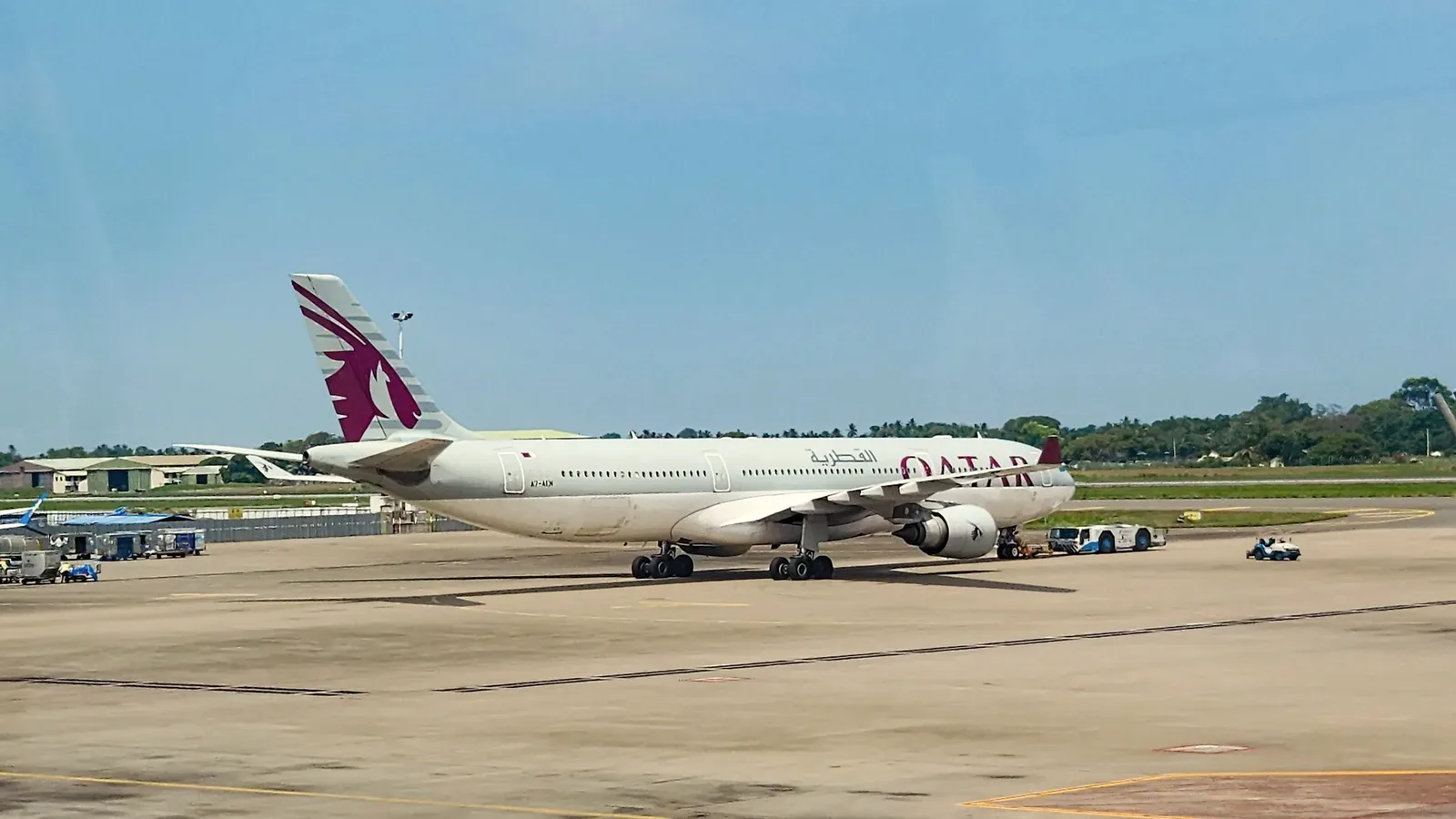
Qatar Airways Freezes All Staff Bonuses Despite $2B Profit; Riyadh Air Opens Public Ticket Sales
Qatar Airways has told approximately 60,000 staff there will be no bonus for the fiscal year ending March 2026, despite posting a $1.97 billion profit, citing Iran conflict geopolitical risk. The decision arrives while crew are already flying fewer hours — and drawing proportionally less pay — due to route disruptions from the same conflict. Emirates, by contrast, paid a 20-week bonus. The morale differential between the two dominant Gulf carriers is now significant and measurable; service consistency on QR bookings deserves close monitoring over the next two to three quarters, particularly on routes where staff motivation is a historical quality differentiator. Separately, Riyadh Air has opened public ticket sales for the first time, graduating from concept to bookable supplier on European and Asian routes and introducing genuine pricing competition on Gulf corridors where Emirates and Qatar Airways have operated with limited rivalry.