Marriott starts verifying work email before granting corporate rates
Marriott has begun requiring travelers to verify a work email address tied to a specific employer before it will apply negotiated corporate rates, closing a loophole where a shared or outdated company code was enough to unlock the discount. For advisors managing negotiated accounts, eligibility now gets checked at the point of booking rather than at check-in, meaning a client whose email doesn't match the contracted domain can be bounced to rack rate mid-transaction rather than caught later at the desk. Anyone booking under a corporate agreement should confirm the traveler's current company email matches the account before quoting a negotiated rate, and flag the change to procurement contacts who may still be circulating old booking codes to employees who've since changed roles, teams, or email domains. Expect friction on renewals where the account's authorized domain list hasn't been updated.
Business class and award economy both get a cheaper, thinner floor
Two moves are quietly raising the real cost of getting what you expect from a fare. Air France/KLM's Flying Blue is stripping lounge access, checked bags, and flexibility from base-level business awards while charging roughly 25% more miles for a version that keeps them; Delta, United, and American are rolling out cash "Basic Business" fares with similar cuts. Separately, Delta, JetBlue, and Southwest are increasingly surfacing a restricted "basic" fare as the cheapest displayed award price — no seat selection, no upgrades, no lounge access — with true standard economy running 22-27% more miles. In both cases, the lowest number shown at search is no longer a reliable proxy for the product. Advisors booking corporate business class or award tickets need to click into fare rules before confirming, and reset client expectations that price and amenities no longer travel together.
CTM's Sabre-to-Amadeus switch could run two years
Corporate Travel Management's CEO has confirmed that its move from Sabre to Amadeus could take up to two years, an unusually long runway for a GDS platform switch at a major TMC. For agencies and corporate clients routing bookings through CTM, that means a prolonged window where booking-tool integrations, mid-project vendor coordination, and data or workflow gaps are live risks rather than a single cutover weekend. Advisors and travel managers with CTM-managed programs should ask account teams for a concrete migration timeline and a fallback plan for booking continuity, rather than treating the switch as a background IT project. A migration this size is rare among large TMCs, and it's worth raising in any renewal or RFP conversation over the next two years — disruption risk during a phased migration is typically highest in the middle of the project, not at either end.
Boeing 737 MAX 10 certification days away
Boeing's 737 MAX 10 is reportedly days from FAA certification, clearing the way for deliveries against nearly 1,500 orders that include more than 100 aircraft each at American, Delta, and United. That's the largest single fleet unlock pending at any of the big three domestic carriers, and it will start reshaping per-seat economics and domestic capacity as jets enter service over the coming year. Advisors should watch for schedule changes and fare movement on routes where carriers plan to swap in MAX 10s, particularly where the type replaces smaller narrowbodies and adds seats on already-competitive routes. Certification itself doesn't change bookings today, but it's the milestone that starts the clock on entry-into-service planning, and airlines typically begin publishing schedule changes tied to a new aircraft type within a few months of a date like this one.
Southwest reshapes its network and pulls boarding forward
Southwest is restructuring its network around hub connections rather than the point-to-point flying that defined it for five decades, while separately moving flight-attendant report times up five minutes on 65% of its fleet to pull boarding forward. Together the two changes point to an airline re-engineering itself around the same operational levers — connection banks and boarding sequencing — that legacy carriers have used for years. For advisors, the network shift is the more consequential one: connections booked through Southwest may increasingly resemble hub-and-spoke itineraries with the reliability trade-offs that implies, rather than the point-to-point routings clients have relied on. The boarding change is smaller in scope but signals the same direction — an airline tightening operational timing to compete on efficiency rather than the distinctiveness that used to set it apart. Flag both to clients who chose Southwest specifically for point-to-point simplicity.
Transatlantic capacity tightens at both ends
Delta's newly announced summer 2027 Europe additions — Austin-Paris, Boston-Venice, and Detroit-Athens — all serve cities it already flies, while American added three genuinely new destinations and United added ten for the same season; Delta cites capacity constraints from aircraft delivery delays running through 2029-2031. At the same time, Virgin Atlantic is reallocating capacity the other direction on its core UK-US corridor, dropping economy seats from 192 to 127 on refurbished 787s to expand premium cabins, citing 11% corporate demand growth and 7% UK-US traffic growth. Read together, transatlantic capacity is tightening at the premium end even as it stalls on network growth for at least one major carrier. Advisors pitching 2027 European corporate travel should note Delta's relative gap against rivals, and expect fewer discounted economy seats and higher premium fares on Virgin Atlantic's UK-US routes as the reconfiguration rolls out.
Qatar Airways retires A330s as Iran war squeezes Gulf transit demand
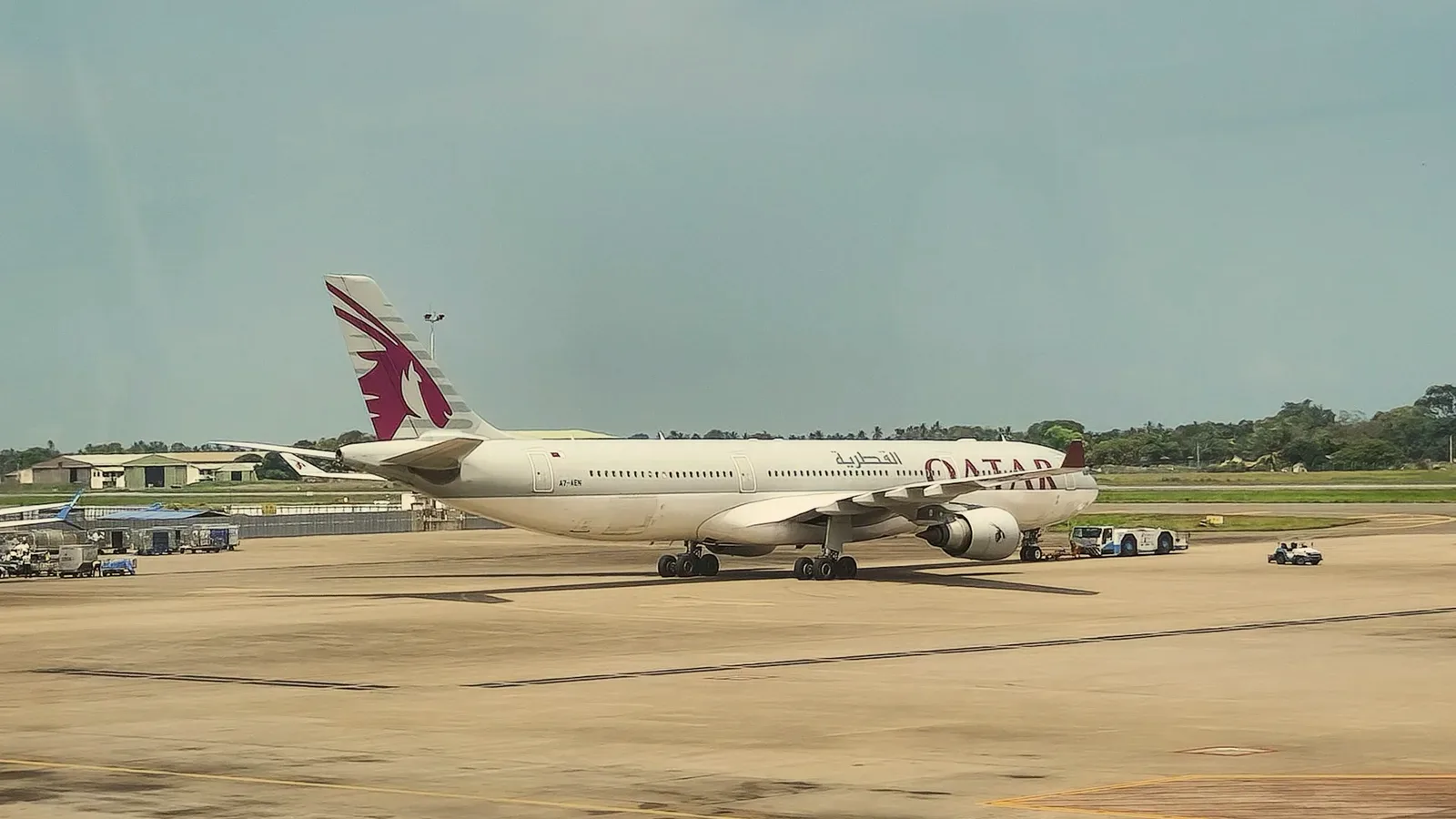
Qatar Airways has retired its entire Airbus A330 fleet — about 7% of capacity — and is sending surplus pilots to RwandAir as regional transit demand drops with the Iran war limiting the carrier's ability to raise fares to offset lost volume. Doha is a major connecting hub for corporate itineraries routing between the Americas, Europe, and South Asia and Africa, so a capacity pullback there has knock-on effects beyond Qatar's own network. Advisors routing clients through Doha should expect tighter widebody availability and be ready to rebook connections consolidated onto fewer aircraft types as the carrier rationalizes its fleet. This is a live, conflict-driven cut rather than a scheduled retirement, so further adjustments are plausible if regional conditions don't stabilize — worth checking Doha connections closer to travel date rather than assuming published schedules hold.
Hilton reportedly testing a tier above Diamond Reserve
Hilton is reportedly testing internal branding for a "Black Diamond" tier above the Diamond Reserve status it introduced earlier this year, continuing a pattern of stacking new tiers above what was previously the top of the ladder. Nothing is confirmed publicly, but the direction is consistent with recent history: each new top tier pushes legacy Diamond elites — the status most frequent corporate travelers actually hold — further from the best treatment at check-in, upgrades, and suite availability. Advisors managing client hotel loyalty expectations should treat this as an early signal rather than assume current Diamond benefits are a fixed ceiling. If Black Diamond materializes, it will likely require spend or night thresholds well above what typical corporate travelers hit in a normal year, meaning the practical value of Diamond status keeps eroding even without any existing benefit changing on paper.