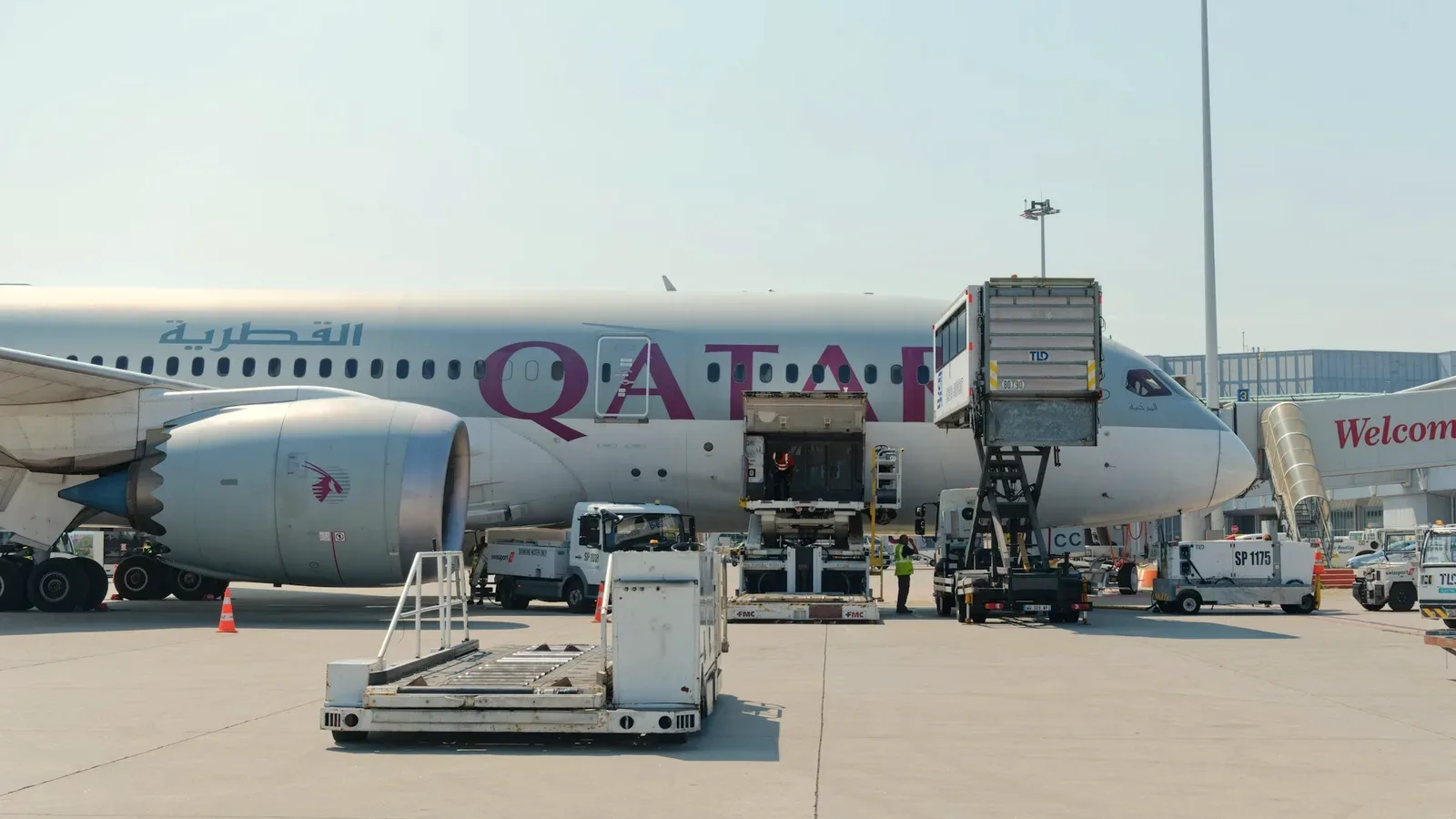
American Airlines: capacity cuts now, loyalty changes ahead
American Airlines is offering unpaid leave to 1,205 flight attendants — 36% more than last September — across all 10 crew bases, led by DFW, CLT and ORD, as it trims September capacity to offset fuel costs. Advisors booking AA this fall should expect schedule consolidations, tighter availability, and less last-minute rebooking flexibility at those hubs. Separately, AA is loosening its Million Miler lifetime-status program: members hitting lifetime thresholds will choose between miles, systemwide upgrades, Loyalty Points, or gifted status rather than a fixed award, though AA's lifetime perks still trail Delta, United and Alaska. No effective date has been published yet. Advisors with corporate clients approaching a 1M–5M-mile threshold should watch for the rollout, since crossing it before versus after the change alters the value of the award.
Northeast ATC disruption risk isn't resolved, whatever caused Friday
DOT Secretary Sean Duffy blamed Friday's roughly 9,000 delays and 2,000 cancellations across New York, Boston, Philadelphia and DC airspace on controllers calling in sick at 40–60% rates. FAA staffing-trigger logs only partially back that account, and NATCA leadership candidates are publicly disputing it, while acknowledging the FAA has cut its own controller staffing target by more than 2,000 positions. For advisors, the dispute matters less than the pattern: this was the highest-magnitude Northeast corridor disruption of the summer, and the underlying staffing shortfall behind it hasn't been resolved. Clients flying through JFK, LGA, EWR, BOS, PHL or DCA this month should carry wider connection buffers and be pre-briefed on rebooking options, since another sick-out or weather event could reproduce Friday's cascade with little warning.
Corporate travel budgets are losing the race against fares
Corporate travel volume is still growing, but fares are growing faster, meaning managed-travel programs are getting less trip volume per budget dollar this cycle, per new industry data. That squeeze has a clear driver: a dozen airlines' Q2 disclosures now quantify how much of 2026's fuel spike they passed through to customers, with jet fuel near $152/barrel (up from $90 in 2025) and industry profit forecasts cut roughly in half. Together, the two data points give advisors concrete ammunition for renewal conversations: T&E budgets aren't being mismanaged, they're being outpaced by fuel-driven fare inflation now documented at the carrier level. Advisors negotiating rate caps or renewing corporate travel policy this quarter should use both figures to reset client expectations on trip volume before budgets are finalized, rather than after overruns appear mid-cycle.
DCA's Terminal 1 rebuild trades a lounge for a longer walk
The Metropolitan Washington Airports Authority detailed a $933 million rebuild of Reagan National's old Terminal 1, adding a nine-gate concourse for Southwest, Air Canada and Frontier along with a new 10,000-square-foot Southwest lounge, but eliminating Terminal 1's own security checkpoint. Once built, passengers on those carriers will clear security through Terminal 2 and walk roughly half a mile to their gate. The project isn't slated to open until around 2031, so there's no immediate booking impact, but advisors should note it as a multi-year construction timeline at one of the busiest business-travel airports in the country. As phases begin, expect interim gate reassignments and longer minimum connection times for Southwest, Air Canada and Frontier itineraries through DCA, worth building into connection guidance well before the checkpoint changes take effect.
GetYourGuide will surcharge tour operators for its digital services tax bill
GetYourGuide confirmed it will pass its digital services tax costs on to tour operators in France, Italy, Spain, Turkey and the UK starting October 1, surcharging listed suppliers rather than absorbing the bill itself. For advisors packaging tours and activities through GetYourGuide-connected operators in those markets, expect the added cost to flow into net rates by Q4, worth flagging to clients booking European city-break or UK add-on activities now, ahead of the October pricing shift. It's a narrow but concrete supplier-side cost change, and one other OTAs operating under the same DST jurisdictions may follow. Advisors sourcing activities directly with local operators in these markets may want to compare pricing against GetYourGuide's post-surcharge rates once published, since the gap could widen enough to shift where bookings are placed.
Hilton splits corporate accounts into self-serve, hybrid and managed tiers
Hilton's global sales chief detailed a restructuring of how the chain engages corporate accounts, segmenting buyers into three tiers: fully self-serve digital portals, a hybrid digital-plus-support tier, and high-touch managed accounts for the largest programs. The tier an account lands in now determines whether, and how, a live Hilton sales contact is reachable, a shift from the more uniform account-management model advisors have relied on. For advisors and corporate clients with existing negotiated Hilton rates, it's worth confirming which tier an account has been placed in and reconfirming the point of contact, since accounts pushed toward self-serve could lose the responsiveness needed to resolve rate disputes or last-minute group needs. Hilton frames the change as an efficiency move; the real test is whether managed-tier service holds up as mid-size accounts shift toward self-serve tools.
Google starts testing agentic AI hotel booking, with Booking.com on board
Google confirmed it's testing agentic AI hotel booking inside Ask Maps in a limited US rollout, with Booking Holdings' CEO citing early involvement as a launch partner. Rather than just surfacing search results, the feature is designed to let Google's AI complete a hotel booking directly, folding the transaction into the search surface itself. It's an early-stage test, not a live channel yet, but it signals a major search platform moving toward direct AI-driven hotel transactions with real OTA backing behind it. For advisors, the near-term impact is minimal, but it's worth tracking as a longer-term distribution and lead-generation risk: if agentic booking scales inside Google Maps, it changes where corporate travelers start their hotel search before ever reaching an advisor or a supplier's direct site.