West Bank friction 'snowballing': reinforced troops, arson wave, and checkpoint delays not seen in decades
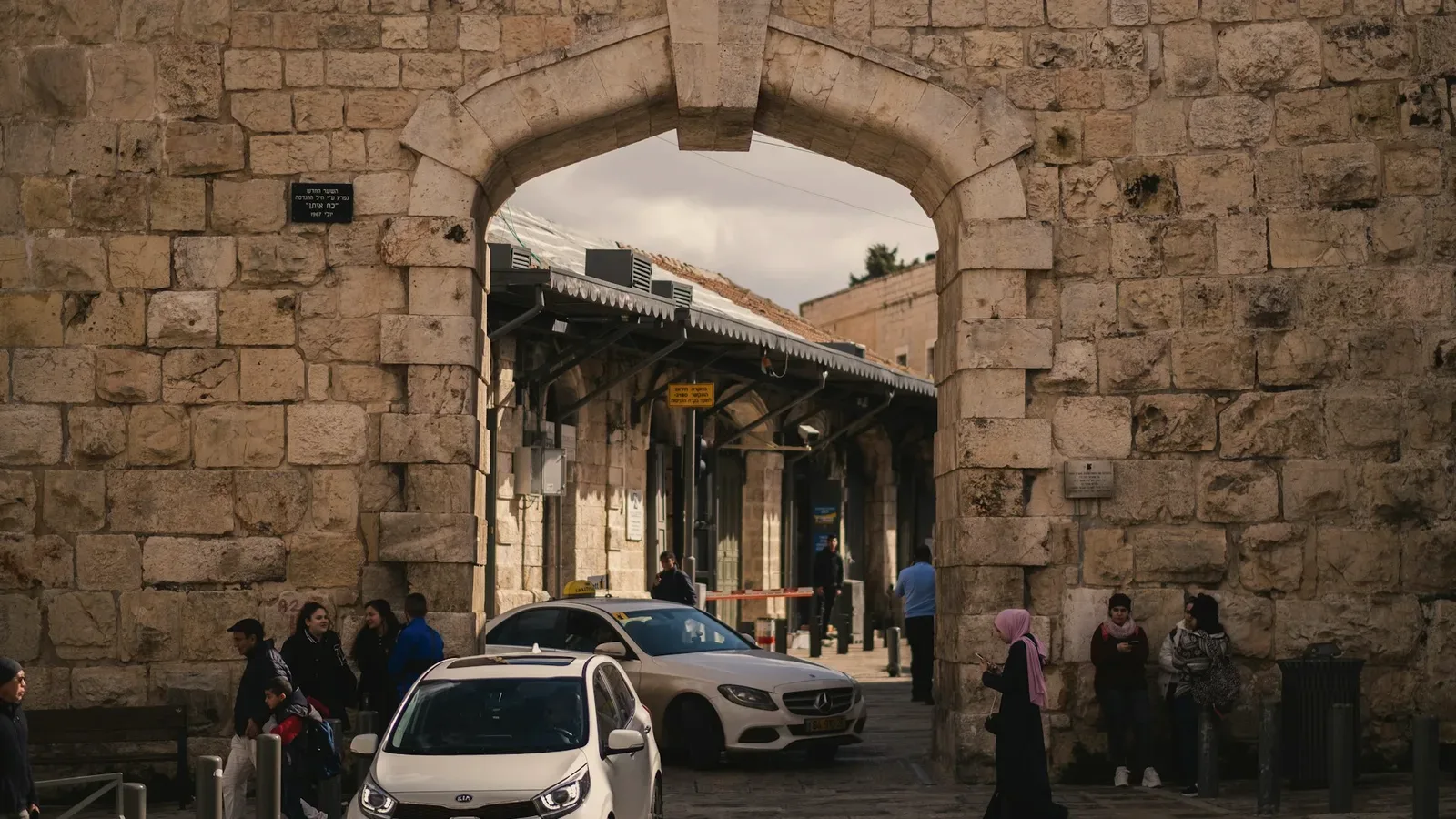
Military officials describe the West Bank security situation as rapidly escalating, reinforcing to roughly 26 battalions after a deadly attack wave and retaliatory arson against a mosque and vehicles; one major operation was reportedly held back until after Netanyahu's US trip. Separately, Palestinian movement restrictions have reached levels not seen since the Second Intifada, with multi-hour delays now standard on Ramallah, Jericho, and Jerusalem-corridor routes. For advisors, these are two compounding risks: sudden curfews or road closures on short notice, and drive-time assumptions for Christian heritage circuits through towns like Taybeh that are simply out of date. Build in significant schedule buffer for any West Bank-adjacent itinerary, or reroute Judea/Samaria-proximate stops entirely until the picture stabilizes. This is not background noise — officials themselves are flagging loss of control over the pace of events.
Iran ceasefire holds but stays fragile ahead of Netanyahu-Trump meeting; drones intercepted near Jordan border
The Iran-Israel-US standoff remains unresolved rather than concluded: Trump denies munitions shortage drove the halt in strikes, Iran says it will keep holding fire only as long as the US maintains the current pause, and the IDF intercepted two UAVs near the Jordan border — all while Netanyahu heads into a consequential Trump meeting. None of this has closed Ben Gurion or grounded carriers, but it is the clearest live precedent for exactly that kind of disruption if the pause breaks down. Advisors with Israel-bound clients this week should keep fares flexible and confirm rebooking terms rather than assume the current calm is durable. Nothing requires action today, but nothing here rules out a fast-moving airspace or routing disruption either.
Cabinet gives initial nod to 200-troop international force for Gaza buffer zone
Israel's cabinet has given initial approval to an international stabilization force of roughly 200 troops, with contributions reportedly including Uganda and Morocco, positioned near the Gaza buffer zone. It's a modest, incremental step rather than an imminent deployment — final sign-off from the prime minister is still required — but it's the kind of concrete policy move advisors can point to when clients ask about the broader security trajectory around the Gaza envelope and southern Israel. Treat it as a signal to watch rather than a change to book against yet.
Tourism Ministry doubles down on Asia: FAM trip for Philippine, Singapore agents; India recovery pushed to 2027
IMOT hosted a familiarization tour for Philippine and Singapore travel agents, part of a wider ASEAN push that includes a joint declaration of intent and ongoing airline talks — though no direct Manila-Tel Aviv service exists yet, so routings still run through connecting hubs. On the India side, officials now project arrivals won't return to pre-war levels until 2027, a more sober timeline than earlier recovery messaging suggested. Together these point to where IMOT is placing its near-term bets: active trade cultivation in Southeast Asia even without direct air access, and patience required on the subcontinent. Advisors serving Philippine, Singapore, or Indian source markets should look for co-op marketing and FAM opportunities now, while tempering volume expectations from India through next year.
Jerusalem's Inbal: domestic guests still dominate, international share far from pre-war norm
The Inbal Hotel in Jerusalem reports 60-70% of its guests are domestic, versus roughly 80% international before the war — and much of the North American traffic that remains is visiting family serving in the IDF rather than traveling for leisure. It's a useful reality check against headline recovery narratives: nearly three years on, one of Jerusalem's flagship properties still hasn't rebuilt its pre-war international mix. For advisors, this is a real benchmark for negotiating group rates and setting expectations on crowding, availability, and the composition of who else will be in the hotel.
El Al passenger denied boarding on paid nonstop despite confirmed seat, steered toward European reroute
A documented case describes a paying El Al passenger with a confirmed seat assignment being denied boarding on a high-demand nonstop, with the offered fallback being exactly the kind of European-transit routing many post-Oct.7 travelers pay a premium to avoid. This isn't a generic complaint about airline overbooking in the abstract — it's a specific pattern on El Al's premium nonstop product that advisors should flag to clients booking those routes. Consider building in arrival-time buffers and confirming protective rebooking language before travel, particularly for clients who specifically chose and paid more for a nonstop to avoid connecting through Europe.
Dan Hotels swaps buffet for guest-chef street food across its three Eilat properties
Dan Hotels is rotating guest chefs serving Israeli street food across Dan Eilat, Dan Panorama Eilat, and Neptune Eilat, replacing standard buffet service with a rotating, chef-driven program. It's a concrete F&B differentiation move in a softer Eilat market, competing on guest experience rather than discounting room rates. For advisors, it's a genuine upsell angle for summer Eilat bookings at these three properties — worth mentioning to clients choosing between Dan's Eilat portfolio and competing chains on the strip.