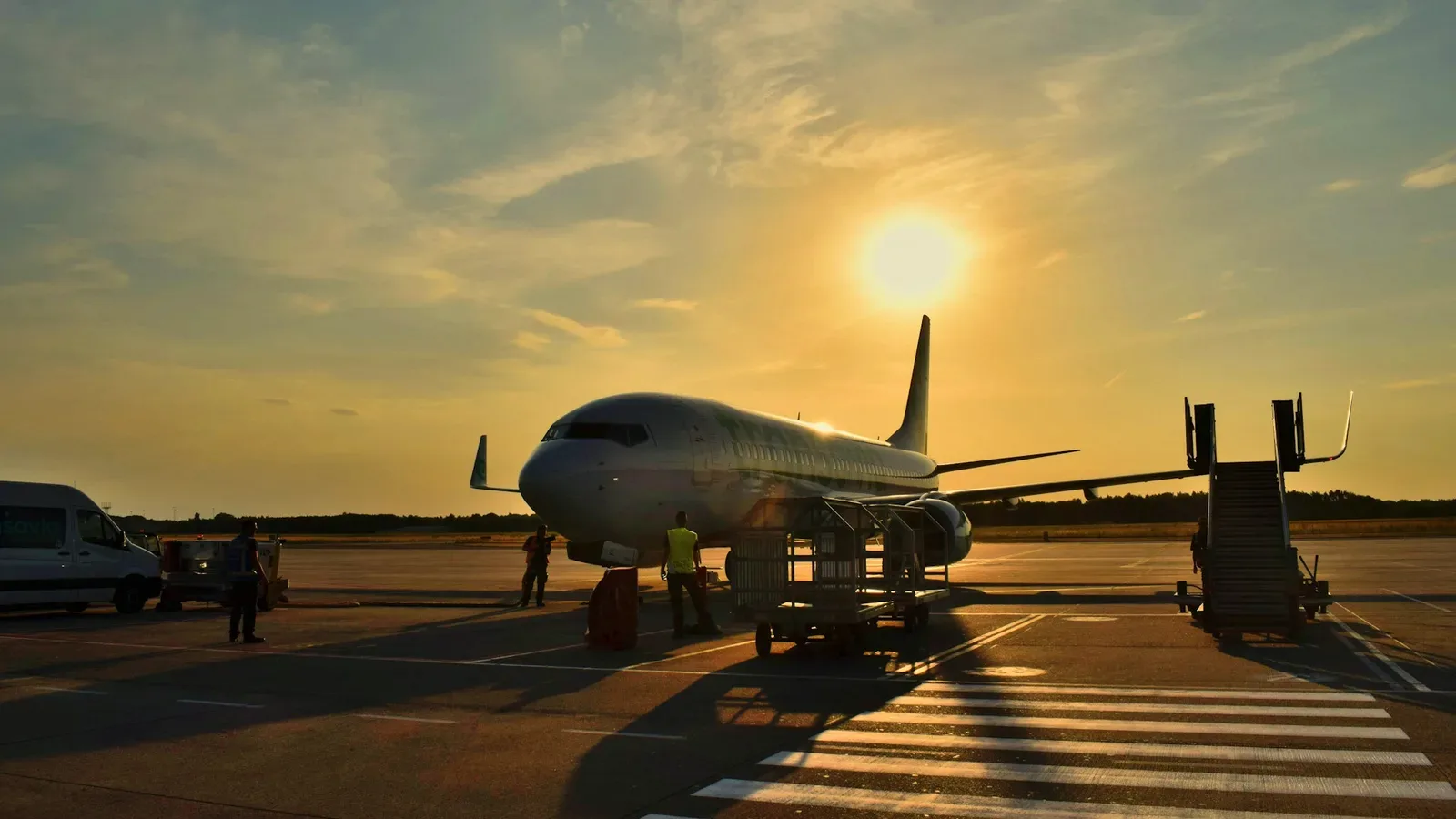
American bets on growth as profit craters 88%
American Airlines posted an 88% collapse in second-quarter profit and told investors 2026 will likely be a loss year — yet it's the only major US carrier adding capacity, guiding to 3-5% seat growth next quarter while Delta and United hold flat or cut. Management frames the growth as evidence its network turnaround is finally working; Wall Street isn't convinced, and analysts pressed on the earnings call for proof the extra seats are filling at healthy fares rather than being dumped at a discount. For advisors, the split cuts two ways: American inventory should stay plentiful and price-competitive through the back half of the year, but a carrier flying against the industry's capacity discipline while losing money is also more likely to face a forced correction — schedule cuts or fare resets — if the bet doesn't pay off. Watch Q3 results before locking in longer-term corporate commitments.
Southwest confirms lounges and a premium card are coming
Southwest is following through on its post-Elliott overhaul: CEO Bob Jordan confirmed the airline has signed leases for airport lounges — Austin, Dallas, Nashville, Denver and Honolulu named so far — and is developing a new premium co-brand card priced between $395 and $650 a year with lounge and Priority Pass access. Paired with assigned seating and extra-legroom rows already rolling out, this marks a real pivot away from Southwest's all-economy identity toward the premium and corporate travelers it has historically ceded to legacy carriers. Nothing is bookable yet — lounges and the card remain in development — but the direction is now confirmed rather than speculative. Advisors managing business accounts that avoid Southwest for lack of lounge access or elevated cabins should flag this as a program to revisit within the next year as specifics firm up.
Hilton and Marriott explore shared corporate-travel ground
Hilton and Marriott are reportedly in early discussions about new corporate travel connections — potentially shared or interoperable infrastructure touching how negotiated corporate rates, RFPs, and loyalty reciprocity get handled across the two largest hotel companies. Details remain thin, but direct competitors exploring any form of cross-brand cooperation on the corporate side is unusual and worth tracking closely, since it could reshape how advisors and TMCs structure multi-brand hotel programs if it moves beyond talks. For now there's no confirmed structure, timeline, or scope — this is a signal to watch rather than act on. Advisors with active RFPs spanning both chains should ask account reps directly whether their properties are aware of any pending changes to rate-loading or loyalty terms before renewing multi-year corporate agreements.
JetBlue's bonds signal distress; ex-United CEO sees a deal coming
JetBlue's frequent-flyer-collateralized bonds, backed by the TrueBlue program, fell to their lowest price since issuance this week, pushing yields to 14% and reflecting a CCC+ credit rating — a real distress signal from debt markets, not just soft earnings. The airline has scheduled an unexplained investor call, adding to uncertainty as it continues closing New York-area crew bases. Separately, former United CEO Oscar Munoz said sophisticated investors are actively circling cheap US airline stocks and predicted a deal is coming soon, naming Alaska, American and JetBlue as plausible targets. Neither story confirms an imminent transaction, but together they point to real financial fragility spreading beyond one carrier. Advisors with corporate contracts tied to JetBlue should treat schedule and route stability as an open question, and watch for ownership-driven shakeups elsewhere — Southwest's Elliott-driven overhaul is the template for how fast a new owner reshapes a loyalty program.
United eyes Emirates' cast-off 777Xs as Pacific yields diverge
United is reportedly in talks to acquire early Boeing 777-9 frames that Emirates declined to accept, a move that would hand United faster widebody capacity ahead of any formal order of its own — relevant to advisors tracking premium cabin availability on United's long-haul network. The interest comes as the Pacific becomes a real battleground: Delta's second-quarter capacity into Asia grew 8% while yields grew only 7%, suggesting its expansion into Hong Kong, Manila and Singapore may be underpriced, while United and American are seeing yields more than double their capacity growth in the region. Read together, United looks better positioned on near-term Pacific pricing discipline even as it pursues widebody capacity through unconventional means. Advisors booking premium Asia-Pacific corporate travel should expect Delta's growth routes to carry softer fares near-term, with United's capacity — and pricing — the one to watch.
IATA picks an outsider to lead the trade body
IATA has named Saadia Zahidi, currently of the World Economic Forum, as its next director general — skipping airline-veteran candidates and breaking with Willie Walsh's insider tenure at the helm of the trade body that shapes ticketing, settlement (BSP/ARC-adjacent) and NDC distribution policy. An outsider without airline operating experience leading the organization that sets global industry standards is a genuine departure from IATA's usual leadership pattern, and it's reasonable to expect a different set of priorities than the commercial-carrier focus recent leaders have brought. It's too early to know how this reshapes distribution or settlement rules that TMCs depend on, but advisors and agencies should treat the appointment as the start of a policy-direction watch period rather than a settled outcome.
TSA hands checkpoint screening to contractors at three airports
TSA is rolling out a new 'Gold+' program that hands checkpoint screening operations to private contractors at three airports first — Tampa, Charleston and Des Moines — with additional airports reportedly seeking to opt in. This is a structural change to how security screening is run, not just a new expedited lane, and it will be corporate travelers passing through those specific airports who encounter it first. Details on what changes day-to-day — wait times, screening procedures, PreCheck interplay — remain limited, but advisors with clients regularly routing through Tampa, Charleston or Des Moines should flag the change and watch for early traveler feedback as the program launches, since privatized screening has produced mixed results elsewhere in the country historically.
Wyndham trims budget rooms, raises fees on midscale brands
Wyndham is deliberately shrinking its economy tier — Super 8 and Days Inn room count down roughly 3% — while growing higher-fee midscale brands, a CEO-confirmed repositioning aimed at lifting fee revenue per available room across the portfolio. This is a pricing strategy, not a one-off property closure, and it will push transient and negotiated rates upward for corporate travel programs that have relied on Wyndham's budget tier to hold down trip costs. Advisors booking Wyndham for cost-conscious corporate accounts — construction, field services, government per-diem travel — should expect fewer budget-tier options and higher effective rates at renewal, and may need to widen RFPs to other economy brands to preserve current per-diem compliance.