Qatar Double Blow: First Class Gone from Australia, Qsuite Companion Awards Restricted
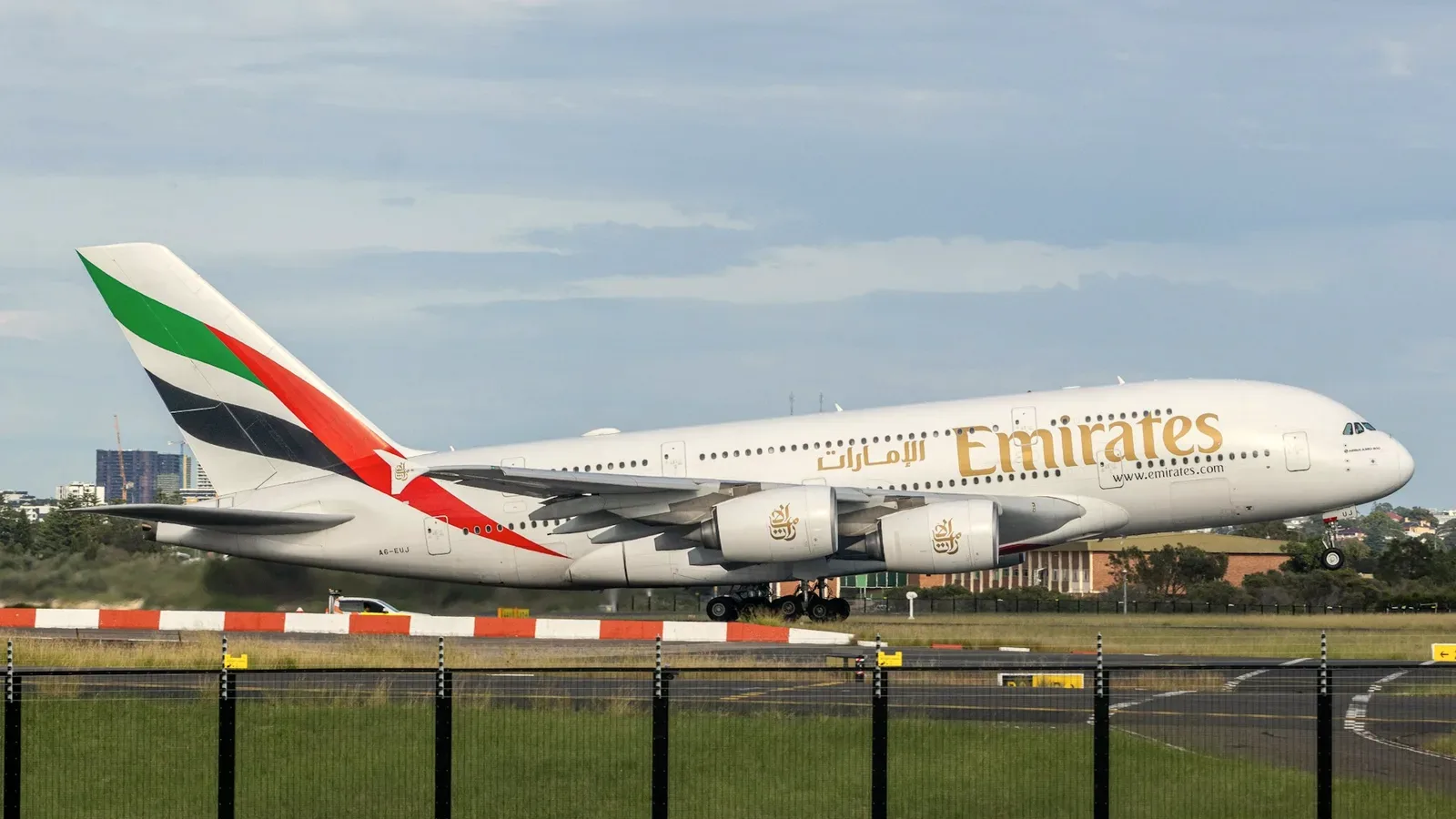
Qatar's Australia operation is absorbing two simultaneous hits. The planned September 16 A380 restart to Sydney has been cancelled and will not be rescheduled; the replacement Boeing 777-300ER carries no First Class cabin, making this a permanent product elimination, not a suspension. Qatar First to Australia — revenue or Avios/QMiles award — is gone. Advisors should audit every open QR F booking on the DOH–SYD corridor now and reroute affected clients to Emirates or Qantas First where available.
Simultaneously, Qatar Privilege Club has imposed immediate new restrictions on companion Qsuite award bookings: accounts must be at least 30 days old, and members must have credited at least one Qatar-network flight or cobranded card transaction before booking Qsuite for anyone else. The widely-used strategy of parking points in Amex MR, Chase UR, or Bilt until ready to book is now blocked for members with no prior activity. Quick fix: open a Privilege Club account today and credit a QR codeshare or short AA segment before the next award attempt.
Structural Fare Shock: Airlines Are Keeping the 27% Increase
May 2026 airfares ran 26.7% above May 2025 levels; last-minute bookings hit +34.1% year-over-year as of June 8. The structural driver is a supply shortfall: seat growth landed at just +0.4% against a projected +4.6%. But the more important number is what isn't coming back. United's Scott Kirby told analysts that even a fast oil snapback could allow the airline to keep roughly 20% of the increase permanently. Delta's Ed Bastian called it 'fuel recapture' that will 'boost margins into next year.' Southwest's Bob Jordan explicitly ruled out returning fare increases.
Jet fuel has already eased to $2.79 per gallon with no corresponding relief at the booking window. Managed-travel programs built around last-minute flexibility face disproportionate exposure. Advisors should reset client T&E budget assumptions upward and push advance-purchase policies immediately — the old benchmarks no longer apply.
SFO Hub Strain: FAA Bans Parallel Landings, United's Flagship 787 Goes Back to Boeing
Two separate developments are compounding pressure on United's Bay Area hub. The FAA has banned San Francisco International's signature simultaneous parallel-runway approach configuration, quadrupling average departure delays. Advisors booking SFO-hub itineraries — especially United transcon and transpacific — must add meaningful connection buffers and revisit international MCT assumptions on existing bookings immediately.
Separately, United's first 'elevated' 787-9 (N61101 — the new Polaris-interior aircraft used as the airline's premium marketing centerpiece since its February 2026 delivery) has been returned to Boeing after repeated in-service failures, including a cancelled return leg on SFO–SIN and multiple June disruptions. The aircraft United has been actively selling to corporate accounts cannot currently be relied upon to deliver that experience. Confirm tail numbers on any SFO-routed premium booking and flag equipment-swap risk to travel managers holding upgraded-cabin inventory on these routes.
United Starlink Goes Transatlantic — 1,000 Aircraft with Free Wi-Fi by Year-End
United operated its first transatlantic Starlink flight — UA14, Newark to London Heathrow — on June 23 aboard a 777-200. The broader headline is acceleration: the airline has confirmed 1,000 mainline and regional aircraft will carry free Starlink by end of 2026, a full year ahead of its previously stated 2027 target. Service is gate-to-gate, free for all MileagePlus members on multiple devices simultaneously, at speeds described as equivalent to ground broadband.
No other US legacy carrier has committed to free fleet-wide connectivity at this scale or on this timeline; American and Delta trail significantly. For corporate travel managers building carrier-preference criteria in managed programs, this is a concrete productivity differentiator — particularly relevant on premium transcon and transatlantic bookings where cabin time is billable. Advisors should use the 1,000-plane commitment as a negotiating data point in any upcoming carrier-of-choice discussion.
Long-Haul Product in Flux: Air Canada's No-PE Narrowbody, Delta's Premium-Dense A350, BA's Overdue Retrofit
Three carriers are simultaneously reconfiguring the premium long-haul map. Air Canada's A321XLR (delivered April 2026) enters transatlantic service with 14 Signature Class suites and 168 economy seats — no Premium Economy at all. These aircraft open thin Atlantic city pairs widebodies can't serve, but advisors must flag the layout: no PE option exists, business class is constrained at 14 seats per departure, and upgrade assumptions built around AC widebody configurations do not apply. Always confirm equipment before booking.
Delta, meanwhile, will become the first US carrier to operate the Airbus A350-1000 when deliveries begin in H2 2026; the 20-aircraft order is configured at roughly 50% premium density — expect yield pressure and limited coach availability as route announcements follow in early 2027.
British Airways has finally begun retrofitting its 12 A380s with the Club Suite, ending the backwards-facing Yin-Yang configuration on routes including Heathrow–JFK. Confirm aircraft on BA A380 bookings but begin reconsidering previously avoided rotations as conversions progress.
Chase Cuts Sapphire Preferred's Hyatt Transfer Ratio — Act Before October 1
Chase has degraded the Sapphire Preferred's Hyatt transfer ratio from 1:1 to 4:3, effective immediately for cards issued on or after June 15. All legacy CSP holders lose the 1:1 ratio on October 1, 2026. In practice: a 30,000-point Hyatt award now requires 40,000 Chase UR points for new cardholders, adding roughly $205 to the effective cost at current valuations.
The Chase Sapphire Reserve retains 1:1 parity with Hyatt and becomes the only UR card with full transfer efficiency. Advisors should counsel CSP-holding clients with pending Hyatt award plans to execute any planned transfers before October 1, and evaluate whether upgrading to the Reserve makes sense if Hyatt is a primary redemption target. Corporate accounts using CSP for hotel spend where Hyatt is a preferred chain face the same math — flag this in any upcoming card or program review.
American Airlines CEO Watch: Succession Risk Grows as Industry Consensus Hardens
At the IATA AGM in Rio this month, multiple airline executives described American's CEO Robert Isom as unlikely to survive 2026, with former AA/US Airways CEO Doug Parker named in several conversations as the leading replacement candidate. Off-record industry consensus of this kind carries weight that analyst speculation does not.
The backdrop is sustained strategic drift: unresolved NDC distribution conflicts, a widening premium-product investment gap behind Delta and United, and continued corporate share erosion. For advisors managing large bilateral agreements with American, the practical read is clear — avoid committing clients to multi-year AA-exclusive structures until the leadership picture resolves. Any incoming CEO may shift materially on distribution architecture and corporate pricing, and locking in long-term terms against an unknown future posture is unnecessary exposure.
Singapore Airlines + Malaysia Airlines JV Now Commercially Active with Joint Corporate Framework
The Singapore Airlines–Malaysia Airlines joint venture — cleared by Singapore regulators in mid-2025 and Malaysia in January 2026 — is now commercially active with shared fares, coordinated schedules on the Changi–Kuala Lumpur corridor, reciprocal lounge access (in progress), and the ability to structure joint corporate agreements across both carriers.
For Asia-Pacific managed travel program managers, the most actionable element is the joint corporate deal framework: the SIN–KUL route is no longer two independent negotiations. Combined network planning is expected to extend to sixth-freedom connectivity through both hubs over time, creating a meaningfully stronger competitor to AirAsia on intra-regional routes. Advisors building or renewing Asia-Pacific managed programs should engage SQ and MH simultaneously and ask for joint corporate rate structures on the combined network.