Airfares Up 30% Since January; Airline CEOs Surprised Demand Held
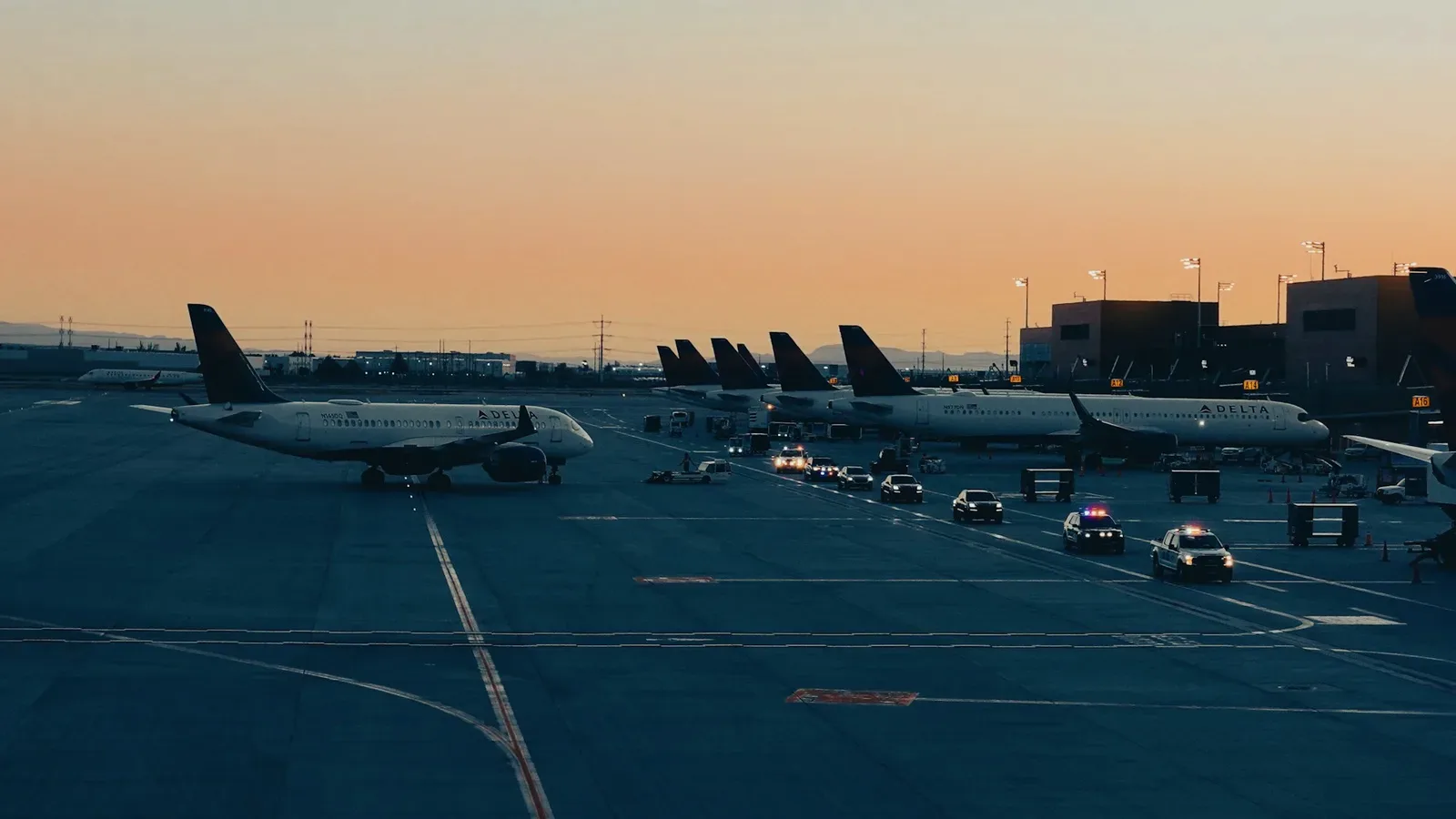
U.S. airfares are up approximately 26.7% year-over-year and 30% since January 2026, per BLS CPI data — the steepest single-period spike in four years. The proximate driver is fuel costs elevated by the Iran conflict, but the more commercially significant signal came from airline CEOs at the IATA AGM in Rio: United's Scott Kirby and WestJet's Alexis von Hoensbroech both said publicly that they expected demand to crack under these fares, and it hasn't. Forward bookings remain strong across carriers. For managed-travel programs, the consequences are immediate: corporate rates locked before May are now materially below spot market in most markets, and T&E policy thresholds calibrated to 2024 fare levels are being triggered in volume. Mid-year air-spend budget reviews are no longer optional. Cathay Pacific's CEO separately confirmed summer demand is holding despite fuel costs, underscoring this is a broad industry dynamic, not a carrier-specific anomaly.
Chase Cuts Hyatt Transfer Ratio 25%; October 1 Deadline for Existing Cardholders
Chase has introduced the first non-1:1 transfer ratio in Ultimate Rewards history: Sapphire Preferred, Ink Business Preferred, legacy Ink Plus, and Corporate Flex cardholders will now receive only 750 Hyatt points per 1,000 UR transferred. New Sapphire Preferred holders are affected from June 15; existing holders convert on October 1. Sapphire Reserve (personal and business) retains 1:1 transfers, creating a hard product bifurcation. The change supports Hyatt's disclosed goal to more than double loyalty program EBITDA from $50M to $105M by 2027 — the same roadmap that recently raised top-property award redemptions by up to 67%. Advisor action: clients with large UR balances on affected products who have near-term Hyatt stays should transfer before October 1. For premium-hotel-heavy clients, the CSR's protected ratio plus the new annual-fee offset math now creates a concrete upgrade argument. Counsel proactively — the deadline is firm.
American Airlines Confirms Widebody RFP; United's CEO Keeps Merger Door Open
CEO Robert Isom confirmed at American's shareholder meeting that the airline has an active RFP with both Boeing and Airbus for its first widebody order in eight years. American retrenched aggressively after the pandemic, retiring roughly 40% of its long-haul fleet, and is now attempting to close the competitive gap with Delta and United on premium international routes. The RFP points toward A330-900neo and 787-9/10 types; realistic delivery windows begin 2028–2030, reshaping transatlantic and transpacific seat supply over a multi-year horizon. Short term, the signal validates American's international growth intent and deserves weight in any near-term transatlantic or transpacific RFP weighting that has previously discounted AA on fleet longevity grounds.
Layered on top: United CEO Scott Kirby again declined — at the IATA AGM and in a CNN interview — to declare a UA–AA combination dead, framing management opposition as the only obstacle. Isom was forced to address it defensively at his own shareholder meeting. Advisors should treat both a standalone fleet rebuild and a consolidation scenario as active watch items.
Qatar Airways Restores Philadelphia–Doha Daily Service August 1; Business Class Award Space Wide Open
Qatar Airways steps into the gap left when American Airlines permanently suspended PHL–DOH in February, restoring daily nonstop service starting August 1 on an A350-900 equipped with Starlink Wi-Fi. Business-class award space is currently showing two or more seats at 70,000 points one-way across multiple currencies — an unusually accessible premium opening on a freshly restored route. One product caveat: QSuites is not guaranteed on this aircraft assignment; the route may operate with Super Diamond seats (lie-flat, direct-aisle access, excellent but without QSuites privacy). Verify the aircraft seat map before booking premium clients. For advisors serving Philadelphia-based or PHL-connecting corporate travelers, this restores the only nonstop Gulf link on American's most efficient East Coast domestic-feed hub, and retains oneworld connectivity and AAdvantage mileage accrual for American loyalists.
United A321XLR Blocks Middle Seats to Cut Crew Ratio; Polaris Gets Chef's Table Menus From August
United's A321XLR will debut with 150 economy seats — a number precisely calibrated to the FAA's 3-flight-attendant threshold under 14 CFR §121.391, avoiding the 4 required above 150 seats. Middle seats are physically blocked with fixed tray tables, yielding an effective 2-2 economy layout. Advisors should communicate this to travelers: no middle-seat neighbor, but somewhat lighter crew presence per passenger than a widebody. The aircraft will serve thinner international and transatlantic markets.
On the premium side, United is addressing Polaris's most consistently cited weakness — food — starting August 1. Ten city-specific menus with 30 dishes designed by Netflix Chef's Table chefs become available on long-haul lunch and dinner flights. Critical detail: pre-order is mandatory, available 5 days to 24 hours before departure. Travelers who skip pre-order receive the standard Polaris catering. A new menu cycle runs through October 2027. Update traveler briefings accordingly.
Frankfurt Terminal 3 Fully Open June 9; Mixed-Alliance Connection Times Must Be Recalculated
Frankfurt Airport completed its Terminal 3 migration on June 9, moving all remaining non-Star Alliance carriers — including Emirates, oneworld members, and several Gulf carriers — from the outdated Terminal 2 into the new 19-million-passenger-capacity facility. T3 sits on the opposite side of the airfield from Terminals 1 and 2; the SkyLine automated people mover provides the inter-terminal link, with a journey of up to 10 minutes running every 2 minutes, though reliability issues have been reported since partial opening. Any corporate itinerary routing a connection between Star Alliance metal in T1 and a non-Star carrier in T3 — Emirates, Cathay, British Airways, Qatar, Iberia — requires a minimum connection time revision. The standard 60-minute MCT in most GDS systems predates the new layout. Issue updated connection-time guidance to travelers transiting FRA on mixed-alliance bookings. Condor remains in T1 until summer 2027.
IHG: UAE Demand Soft Through Q3 on Iran Conflict; Q4 2026 Negotiation Window Now
IHG's MENA managing director disclosed that all 39 UAE properties are experiencing near-term demand softness linked to the Iran war, with international conferences "notably absent" though smaller regional meetings are partially filling the gap. Dubai's government has publicly targeted September as a demand inflection point, contingent on airline capacity restoration; IHG confirmed Q4 2026 forward booking pace is "ramping up nicely." The takeaway for advisors: Q3 2026 is a genuine rate negotiation window for GCC hotel programs and MICE events originally earmarked for the UAE. That window will close as Q4 demand recovery firms up — book Q4 2026 UAE events soon to capture availability before recovery occupancy re-compresses rates. IHG's Saudi Arabia portfolio of 48 properties appears largely unaffected, suggesting Riyadh and Jeddah carry fewer concessions for events that could be relocated.
Singapore Airlines Restores Singapore–Madrid Route October 26 After 22-Year Absence
Singapore Airlines will operate Singapore–Madrid 5x weekly from October 26, 2026, making Madrid its 15th European destination and ending a 22-year gap on the corridor. The route includes a Barcelona stopover, offering secondary connectivity for the broader Iberia Peninsula. Reservations opened June 8. Until now, Singapore–Spain routing required connecting through Middle East hubs or other European gateways; SQ's entry creates a Star Alliance premium option relevant for advisors booking Singapore-based, Southeast Asia-originating, or India-transiting corporate travelers bound for Spain's financial and industrial centers. The October 26 launch date aligns with the IATA winter schedule change — fares and award inventory are loading now, and premium cabin availability on a new route tends to be more accessible in the first booking weeks.