US Customs Pullback and EU Biometric Queues Create a Double Pinch at the Border
The Trump administration is drawing up plans to withdraw CBP officers from ten major US airports — including JFK, LAX, and SFO — as leverage against sanctuary-city jurisdictions. If enacted, airlines would be forced to re-route all international arrivals to compliant gateways, invalidating thousands of transatlantic and transpacific corporate itineraries with minimal advance notice. There is no public timeline, but the plans are sufficiently developed to warrant contingency routing reviews now.
At the European end of those same routes, the EU's Entry/Exit System biometric border check — live since April 10 — is still generating two-to-four-hour queues at Lisbon, Faro, Las Palmas, and other Schengen entry points as of the May 25–26 weekend. IATA has flagged four-hour peak delays through summer. Advisors should add a minimum three-hour connection buffer at any Schengen entry airport, brief summer Europe clients immediately, and document missed-flight liability exposure in duty-of-care records.
- US: CBP withdrawal from sanctuary-city airports would redirect all international arrivals — monitor for formal announcement and identify compliant alternate gateways
- EU: Three-hour minimum connection buffer now required at all Schengen entry points through at least late summer
- Document missed-flight liability for every European itinerary booked today
American Quietly Closes the Saver Award Window for Partners Within Six Days of Departure
American has stopped releasing 'U' and 'T' saver fare buckets on nonstop domestic flights within approximately six days of departure. The suppression is asymmetric: AAdvantage members still see alternate — and higher-cost — award pricing, but partner programs lose access entirely. Alaska Airlines and British Airways Executive Club are most directly exposed, as both have historically relied on close-in AA domestic saver space for last-minute rescue bookings.
The timing is commercial: last-minute domestic seats are highest-yield, and American has no contractual obligation to make them available to outside programs. The situation is described as ongoing and potentially permanent. Clients with domestic AA travel needed within the next week should be directed to book through AAdvantage directly or priced against cash fares. Any managed travel program that benchmarks AA partner award value as a fallback option should revisit those assumptions immediately.
Iran Conflict Is Compressing Capacity at Two Major Long-Haul Hubs Simultaneously
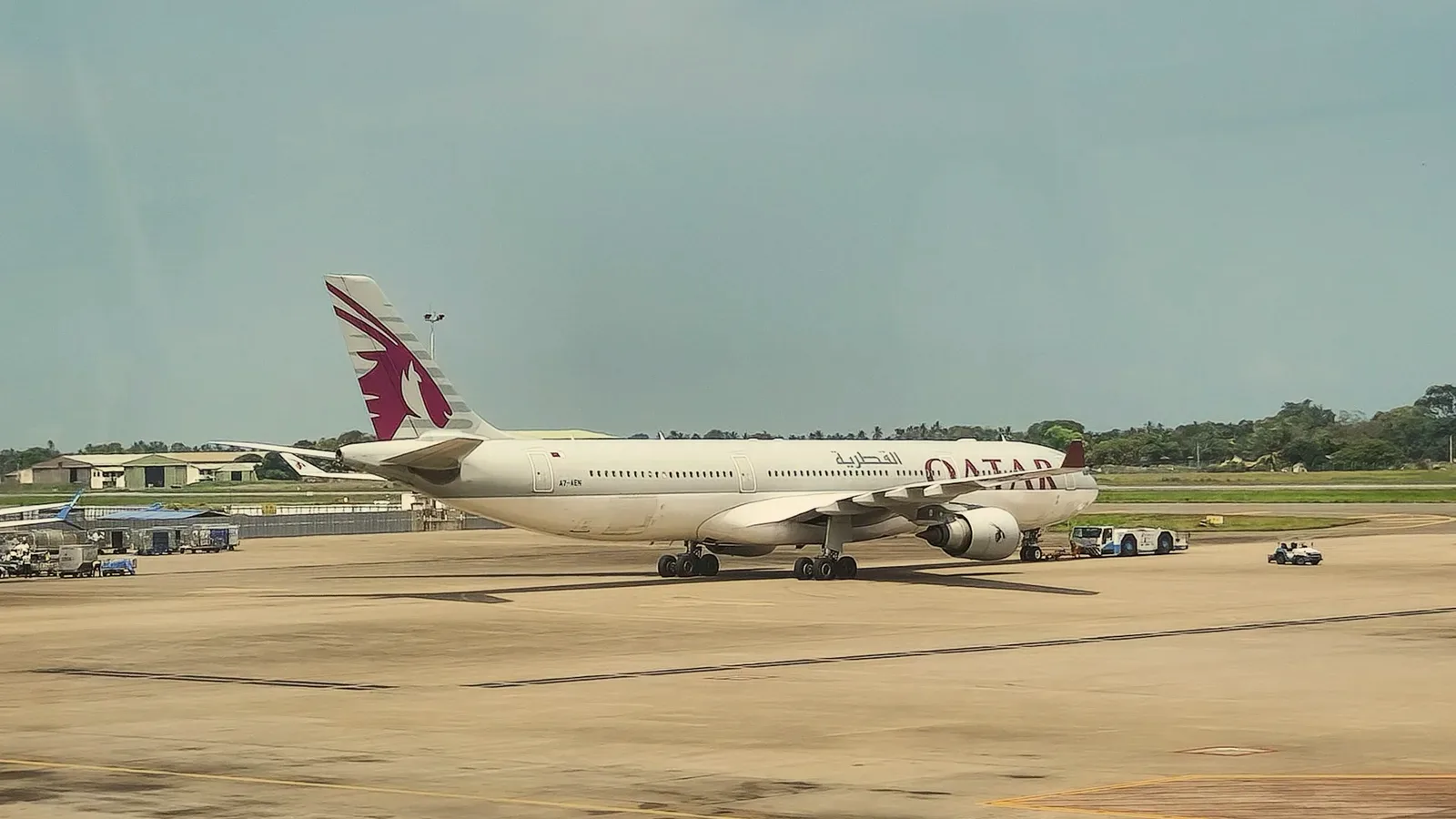
Qatar Airways has roughly 20% of its fleet grounded — a combination of stored aircraft and operational restrictions tied to Middle East airspace closures — squeezing business-class inventory across the network and introducing schedule volatility on routes that relied on Iranian overflight for block-time efficiency. Advisors pricing QR for long-haul premium travel should expect tighter award availability, harder upgrade paths, and re-routings that add meaningful block time to already long journeys.
Turkish Airlines presents a parallel picture: the Star Alliance carrier is simultaneously launching ten new ultra-long routes for June 2026 through March 2027 — including Sydney via Kuala Lumpur at up to 21 hours 40 minutes — while suspending dozens of routes due to the same airspace closures. The Sydney-via-KL routing reflects at least a two-hour penalty versus pre-war Iranian overflight tracks. Re-validate block times and route continuity on all QR and TK itineraries before ticketing.
- QR: ~20% fleet grounded; tighter premium-cabin availability and possible re-routings across the network
- TK: New ultra-long routes reflect Iran war detours, not efficiency gains — verify actual elapsed times
- Re-validate block times on all Middle East-routed itineraries before ticketing
Kirby Closes the M&A Door — and Opens a Question About JetBlue's Survival
United CEO Scott Kirby this week publicly ruled out acquiring any airline "for any time I can see in the foreseeable future," explicitly dismissing American and JetBlue. The JetBlue dismissal carries a structural asterisk: Kirby acknowledged that a pre-packaged bankruptcy filing would change his calculus. JetBlue's founder has separately suggested a 2026 bankruptcy is possible — JetBlue disputes imminent action — but the convergence of founder warning and acquirer acknowledgment introduces real risk to TrueBlue redemptions, the United-JetBlue interline partnership, and corporate contracts dependent on B6 metal. Review any account where JetBlue is the preferred carrier.
Separately, at least three United flights sat on the Newark tarmac for seven to eight hours on May 20, likely violating DOT's 3-hour domestic rule, with United offering $200 vouchers as remedy. The Trump administration has issued zero tarmac delay fines since taking office. Advisors should review whether SLA language in carrier contracts still provides meaningful protection absent regulatory enforcement.
- JetBlue: Founder-acknowledged bankruptcy risk; audit corporate contracts tied to B6 metal and TrueBlue redemption exposure
- United: Zero DOT tarmac enforcement since Jan 2025 — revisit carrier SLA language in managed travel policies
Delta's AI Pricing and FCM's Blockskye Signal a Commercial Reckoning for Managed Travel
Delta's CEO has confirmed that the airline is developing AI-driven pricing capable of generating "a fare just for you" — an individualized, per-traveler price computed at the moment of search rather than drawn from a published fare basis. Extended to GDS and corporate channels, this model would undermine volume-based negotiated rates and transparent fare classes, requiring procurement teams to renegotiate contract benchmarks, audit methods, and savings-reporting frameworks.
FCM Travel is positioning its blockchain-based Blockskye platform as a commercial counter-lever, using verified transaction data to extract better airline overrides and terms for corporate clients. The pairing of these two developments reveals a dynamic in motion: as airlines move toward personalized yield extraction, large TMCs are building technology-driven negotiation infrastructure. Independent advisors should monitor whether airlines respond by bundling better terms exclusively inside NDC channels to bypass Blockskye-style leverage — or whether this becomes an accepted part of the commercial negotiation landscape.
NEOM Suspension Leaves Riyadh Air Without Its Central Demand Story
Saudi Arabia has halted all construction on The Line, the flagship NEOM mega-city, with no resumption expected before 2030. The project's estimated cost has exceeded $1 trillion, and the PIF sovereign wealth fund is pulling back from capital-intensive grand initiatives. The immediate casualty for travel advisors evaluating Gulf routing alternatives is Riyadh Air: the PIF-backed carrier built its 100-destination network ambition around inbound NEOM tourism and business traffic. It currently operates only to London, with A321neo, A350, and 787 aircraft on order and a Delta partnership in place.
Expo 2030 and the 2034 FIFA World Cup provide residual demand anchors but cannot substitute for the sustained premium-cabin volume NEOM was intended to generate. Advisors considering Riyadh Air as a competitor to Emirates or Qatar for Gulf itineraries should apply a higher uncertainty discount to schedule stability and route expansion commitments until PIF's funding posture clarifies.
Caesars' $5.7B Sale Carries $11.9B in Debt — Asset Disposals Are the Logical Next Move
Fertitta Entertainment has agreed to acquire Caesars Entertainment for $5.7 billion in cash at a 49% premium, but the deal assumes $11.9 billion of existing Caesars debt — a structure characterized as "buying a debt pile with a casino attached." Precedent from similarly leveraged hotel acquisitions points to property divestitures within 18 to 24 months as the new owner seeks to reduce the debt load. Corporate accounts with negotiated rate agreements tied to Caesars Rewards properties — particularly convention-heavy Las Vegas assets and major regional casino-hotels — should flag continuity risk now.
A July 11 go-shop window remains open, leaving room for a competing bid that could reset ownership and debt structure again. Advisors managing group and convention volume through Caesars should verify whether existing corporate rate agreements carry change-of-ownership protections, and prioritize renewals that fall within the anticipated divestiture window.
Accor Opens an 18-Month Succession Window — With 40% Shareholder Dissent at Its Back
Accor CEO Sébastien Bazin has announced his current term, ending May 2028, will be his last — with the possibility of an earlier handoff "if the board finds the right person." More than 40% of shareholders voted against his remuneration package at the AGM, underscoring the board pressure behind the timeline. Bazin led Accor's pivot to an asset-light, brand-licensing model across 5,600-plus properties from ibis to Raffles; a successor with a different philosophy could accelerate or reverse that direction, either of which reshapes the managed-travel footprint advisors rely on across Europe, Asia-Pacific, and the Middle East.
A real-estate-oriented CEO would imply more owned inventory and potentially deeper corporate contracting leverage; an accelerated asset-light path would push more rate decisions to franchise operators. Neither outcome is certain, but the 18-month open window is long enough to affect active account renewals. Watch the appointment announcement closely.